

The Impact
Understanding the Financial Impact
We know how important it is to use tax dollars wisely, which is why we’ve worked really hard to focus this proposal on our most critical needs. It’s also why you will have the chance to consider and vote on three separate questions. The first focuses on addressing our most pressing educational, operations, safety, accessibility, and maintenance needs. The second focuses on remodeling our high school media center to better support students and improvements to our auditorium and bus garage. And the third question focuses on creating safer, more functional outdoor athletic facilities. Click here to learn more about the plan.
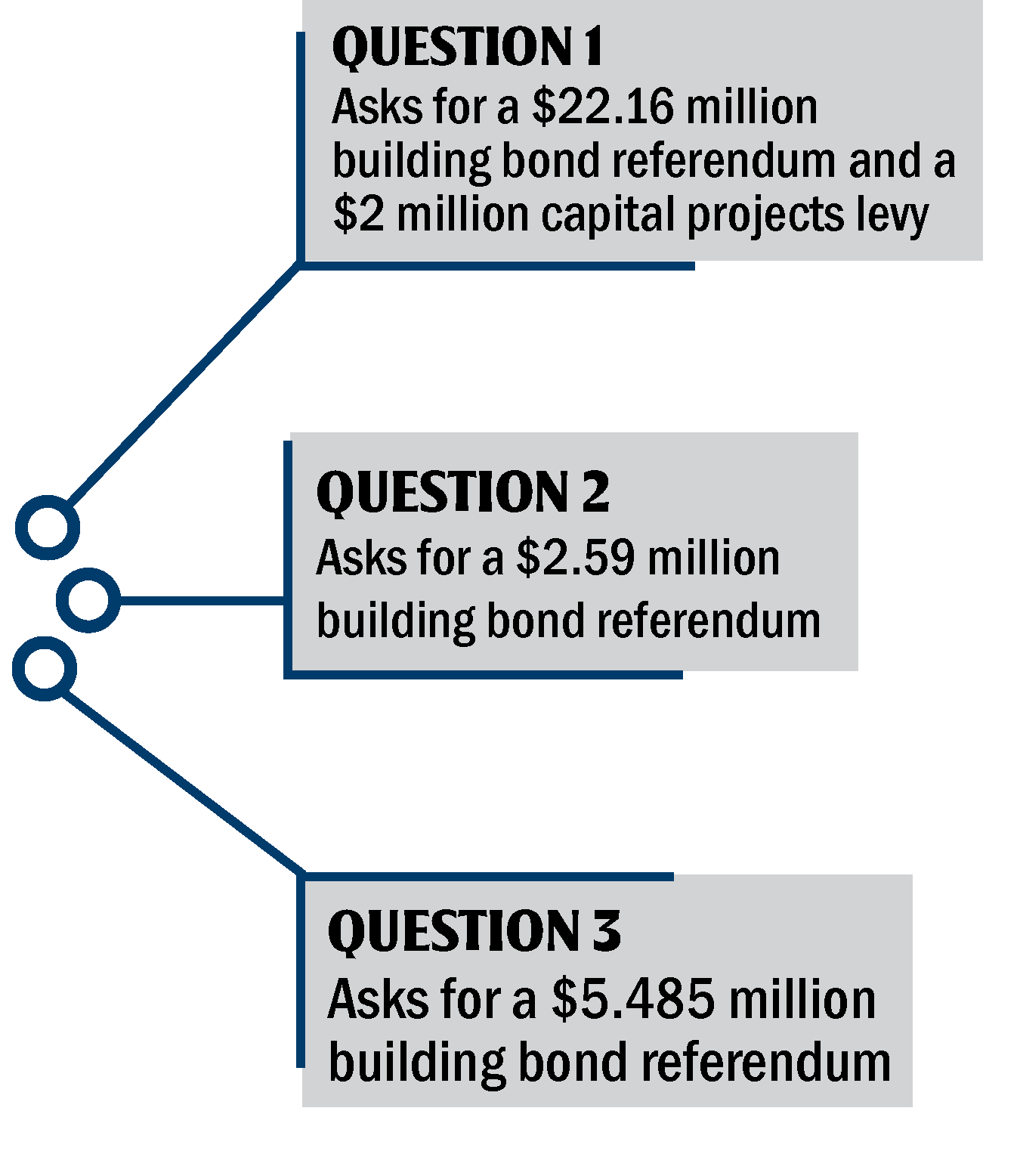
Question 1 asks for a $22.16 million building bond referendum and a $2 million ($200,000 per year for 10 years) capital projects levy, Question 2 asks for a $2.59 million building bond referendum, and Question 3 asks for a $5.485 million building bond referendum. Questions 2 and 3 are contingent on Question 1 passing.
If approved by voters, the proposed investments would be funded through a property tax increase on taxable property throughout the district. Taxes to support building bond referendum and capital project levies are paid by residential, agricultural, commercial/industrial, and seasonal/recreational property owners based on property type and value. The bonds would be issued for 20 years.
Estimated Tax Impact
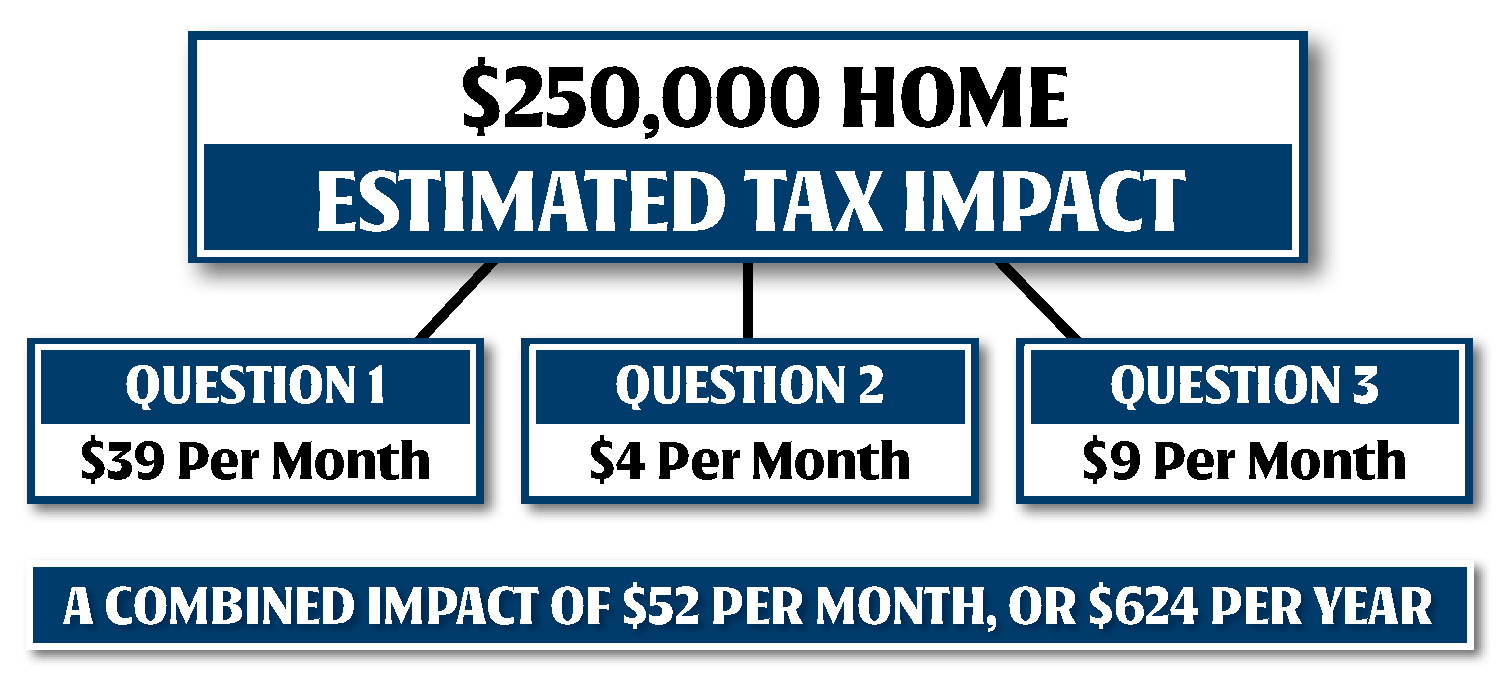
For an average residential home valued at $250,000, the estimated tax impacts would be:
Question 1: Approximately $39 per month.
Question 2: Approximately $4 per month.
Question 3: Approximately $9 per month.
If all three ballot questions are approved, the estimated combined tax impact on an average residential home valued at $250,000 would be approximately $52 per month, or $624 per year.
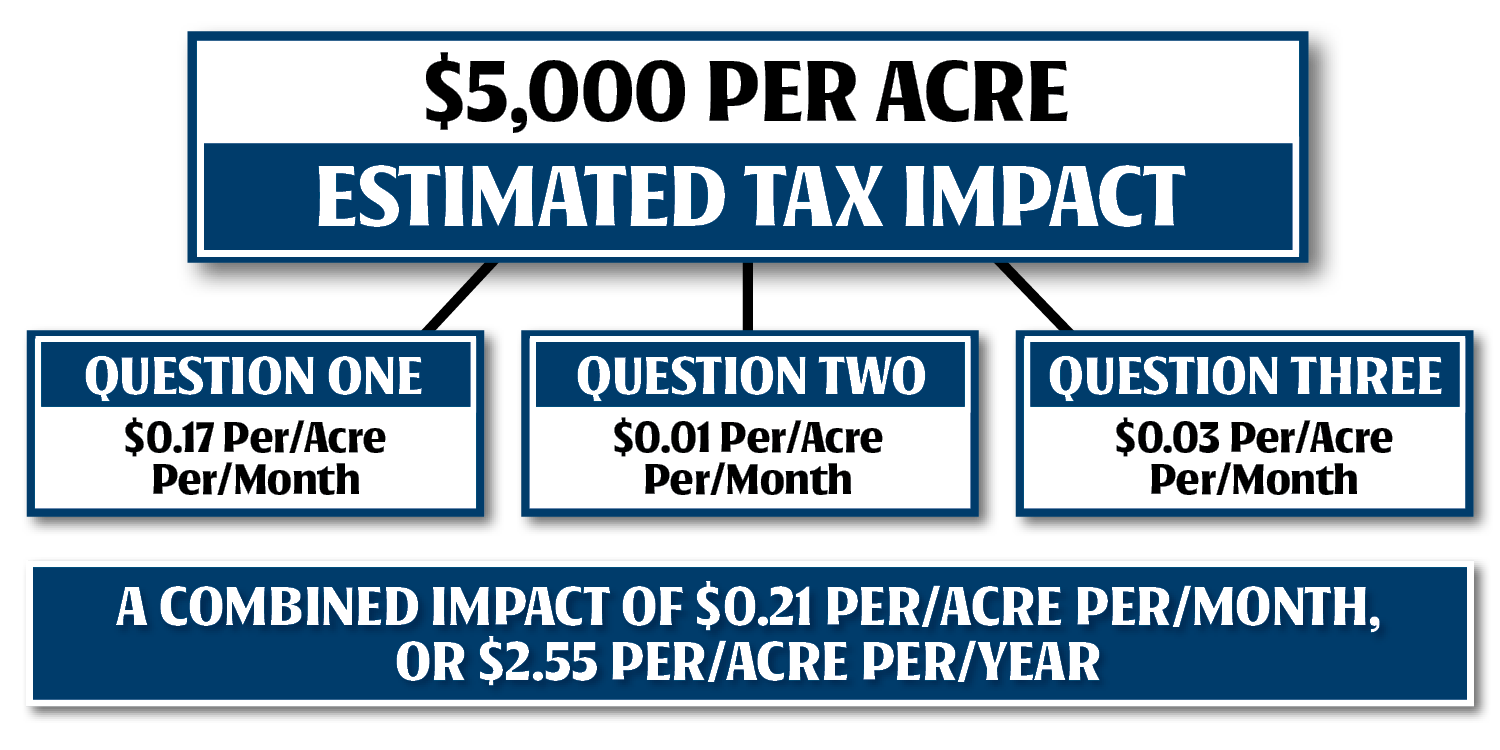
For an average agricultural homestead valued at $5,000 per acre, the estimated tax impacts would be:
Question 1: Approximately $0.17 per acre per month.
Question 2: Approximately $0.01 per acre per month.
Question 3: Approximately $0.03 per acre per month.
If all three ballot questions are approved, the estimated combined tax impact on an average agricultural homestead valued at $5,000 per acre would be approximately $0.21 per acre per month, or $2.55 per acre per year.

Ag2School Tax Credit
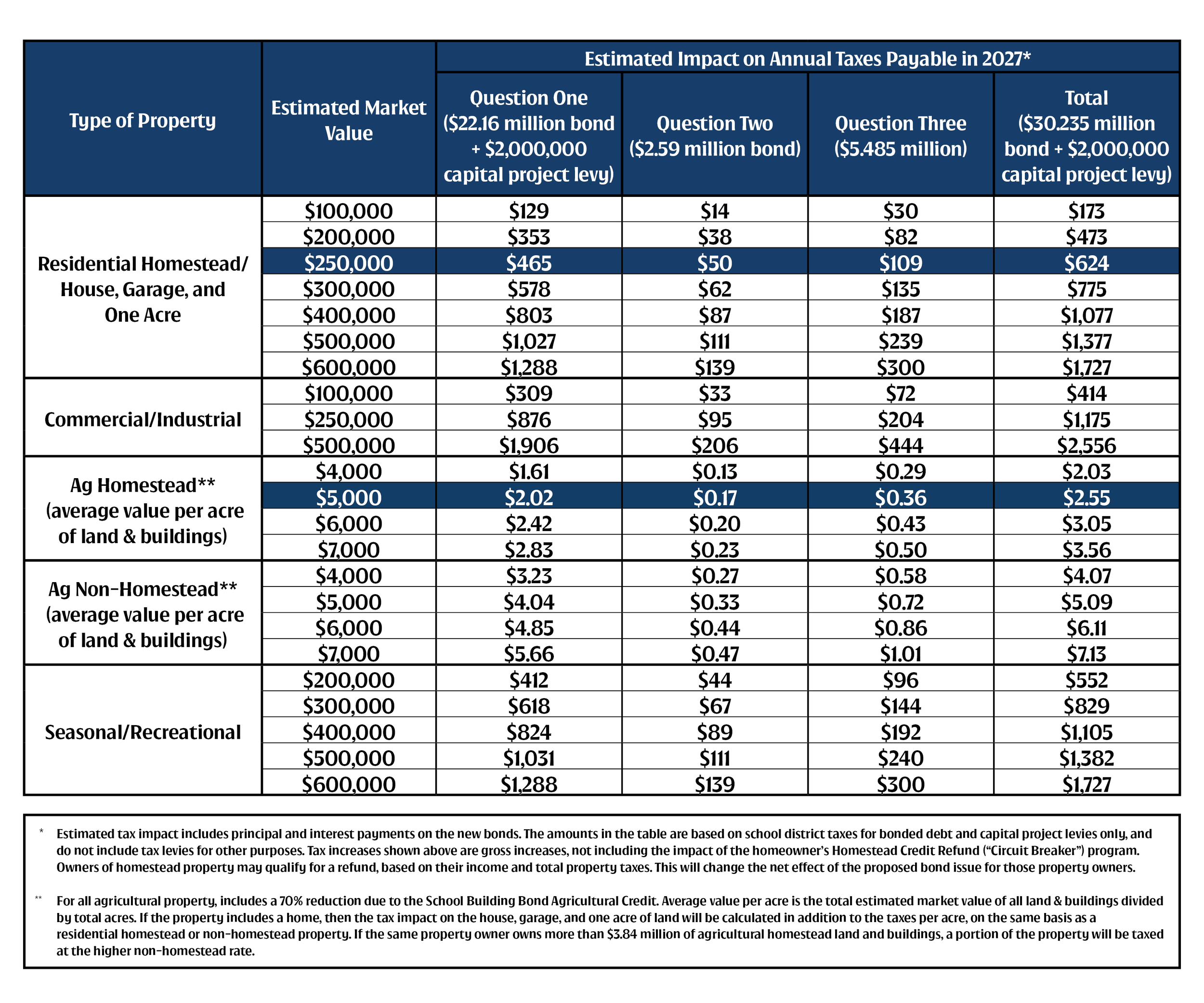
Qualifying agricultural land will receive an automatic 70% tax credit for taxes paid as a result of the referendum through Minnesota’s Ag2School Tax Credit program. This credit is provided to all agricultural property except the house, garage, and one acre surrounding an agricultural homestead. The credit will remain at 70% for the full term of the referendum bonds. This is not a tax deduction – it is an automatic dollar-for-dollar credit provided automatically by the state, so no application is required.

Potential Ways to Offset Your Tax Impact
You may be eligible for ways to offset increases to your property taxes from the referendum, including:
Homestead credit refund – the state’s largest property tax refund program.
Special one-year refund – for excessive increases (12% increase and at least $100).
Senior tax deferral – helping those 65+ manage property tax bills.
Renters’ property tax credit – tax relief for renters.
The referendum may make you eligible for these refunds/credits or may increase the amount from any refunds/credits you already receive. In addition, an increase in property taxes may be deductible on your federal tax return if you itemize deductions.
Homestead Credit Refund
Through the Minnesota Department of Revenue, the Homestead Credit Refund Program offers a refund to homeowners who meet certain qualifications. The amount of the refund is based on household income and total property taxes paid. To receive the refund, you must file Form M1PR with the Minnesota Department of Revenue. The proposed referendum may make you eligible for this refund or increase the amount you receive. Learn more here.
Requirements:
Your total household income must be less than $142,490.
You must be a Minnesota resident or part-year resident to qualify for a property tax refund.
You must have owned and occupied your home on January 2, 2026.
Your property must be classified as your homestead, or you must have applied for homestead classification and had it approved.
Your homestead must have no delinquent property taxes. Generally, property taxes are not delinquent if you have either paid them or signed a confession of judgment.